










Table of Contents
The biggest headaches with small living rooms usually boil down to three things: no windows, poor lighting, and too much stuff. Many older or compact floor plans either have just one small window or are outright interior rooms with no direct light at all, forcing you to switch on the lights the moment you walk in—even during the day. When natural light is lacking, the whole space feels dim and heavy, and spending time there can start to feel stifling. Add to that a small footprint that barely fits a sofa, coffee table, and TV console, and even the walkways start to disappear, making the room feel even more cramped. Worse still, many homes rely on a single ceiling-mounted fixture dead center in the room, casting light straight down and leaving every corner in shadow. This flattens the outlines of walls and furniture, making the room look smaller than it actually is.
This is where lighting stops being just a tool for "brightening up" a room and becomes one of the most effective ways to fix a space's shortcomings. These are some of the most practical small living room lighting ideas worth trying:
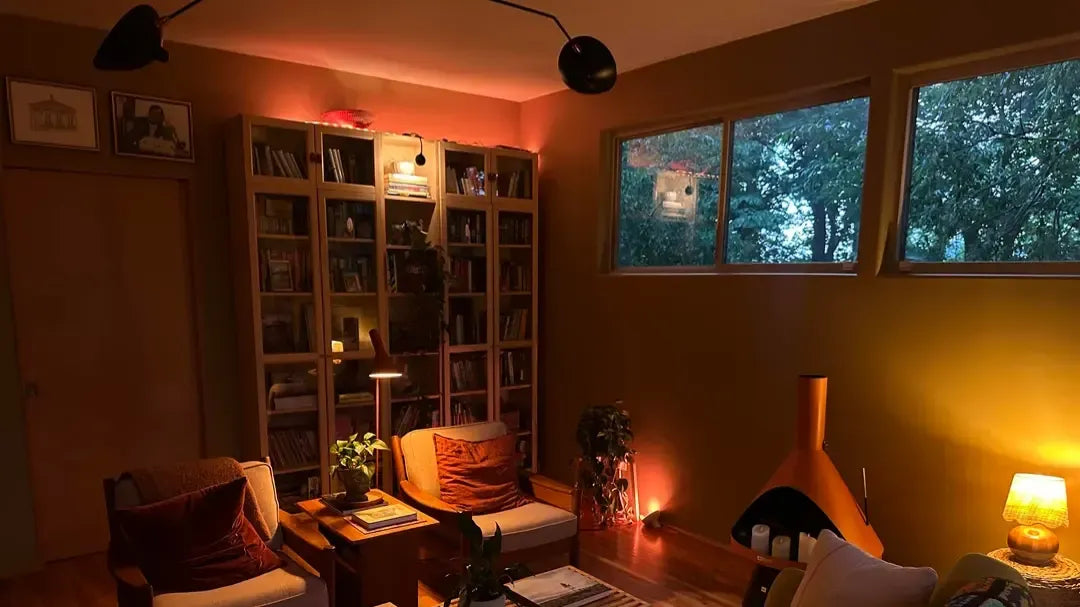
- Layer multiple light sources. Combining floor lamps, wall sconces, and spotlights spreads light across different heights and zones, eliminating dark corners and making the room feel larger and brighter.
- Switch to warm-toned light (2700K–3000K) instead of cool white. Warm light creates a soft, diffused glow across walls and floors, visually blurring hard edges and easing the sense of crowding.
- Target key areas with focused lighting. A reading lamp beside the sofa, or a strip of LED strip lights along the TV wall, draws attention away from the room's small footprint and toward its functionality, naturally opening up the sense of space.
In short, lighting is the one design element that takes up no floor space at all, yet has the power to completely reshape how a room feels. These same principles apply just as well to small dining room lighting ideas and other small space lighting ideas—a little thought put into your lighting plan goes a lot further, and costs a lot less, than replacing furniture or knocking down walls.

Three Layers of Living Room Lighting
When choosing a lighting plan, the first thing to understand is how lighting is categorized—different functions call for different solutions. Broadly speaking, lighting falls into three types based on purpose and mood: ambient lighting (general/base lighting), task lighting, and accent/mood lighting. Each type calls for a different approach.
Ambient Lighting (Base Lighting)
Purpose: Lights up the room and ensures everything is visible—essentially the room's "daytime mode."
What to watch for in a small living room: Many people rely on just one ceiling-mounted fixture dead center in the room. The light is even, but it has zero layering—and when it's too bright, it lights up all four walls in full detail, which only draws more attention to how small the space actually is.
Want to know how to make a small living room look bigger? Check out this article: Small Living Room Ideas That Make Any Space Feel Bigger — get more inspiration for making a compact space feel more spacious.
The right approach:
- Skip the single main fixture and switch to scattered recessed downlights (2–3 fixtures) or track spotlights aimed at the ceiling, so the light diffuses evenly instead of concentrating brightness in the center.
- Choose a color temperature around 4000K neutral white—neither yellow nor cold—for a clean, bright look.
- Keep brightness moderate; it only needs to be enough to walk around and find things comfortably (roughly 100–150 lm/m²), since other light sources will fill in the rest.

Task Lighting
Purpose: Serves a specific activity—watching TV, reading, having tea, using your phone—helping to prevent eye strain.
What to watch for in a small living room: If you rely on ambient lighting alone, reading on the sofa ends up backlit, the TV screen picks up glare, and corner areas stay dim.
The right approach:
- Place a floor lamp or table lamp beside the sofa with the shade angled downward, focusing light around the armrest area. Aim for about 300–500 lm at a warm 3000K color temperature, so reading doesn't strain the eyes.
- Add a strip of LED strip lights behind the TV wall (mounted on the back of the TV or underneath the TV console), aimed toward the wall. This softens the brightness contrast between the screen and its surroundings, easing visual fatigue.
- If there's a pendant light above the coffee table, lower it to about 80–100cm above the tabletop so it illuminates just that area, leaving the surrounding space slightly dimmer. This naturally draws the eye toward the table and away from the room's crowded feel.

Accent / Mood Lighting
Purpose: Creates layering, expands the sense of space, and lifts the mood—this is the area a small living room should really focus on.
What to watch for in a small living room: Without accent lighting, the whole room feels as flat as an office, and the walls seem to close in right in front of you.
The right approach:
- Wall washing: Install upward-facing LED strip lights along the edge of the ceiling molding or in the corners to wash the walls with light. This visually "pushes the walls back," creating a greater sense of depth.
- Under-cabinet lighting: Add hidden LED strip lights beneath cabinetry (TV console, side cabinets) so the light hugs the floor. Once the floor is lit, the ceiling appears taller by comparison.
- Spotlighting focal points: Use small-angle spotlights above artwork or plants to draw the eye upward or outward, shifting attention away from the room's limited square footage.
- Keep color temperature consistent at 2700K–3000K warm light, with very low brightness (just 20%–30% of your ambient lighting level). Even at this low intensity, it's enough to instantly give the space a sense of "depth" and "warmth."
These three types of lighting are all essential, each serving a distinct function. Depending on the scenario, different combinations of lighting types come into play.

10 Small Living Room Lighting Ideas
Now that you understand the types of lighting, here are some specific solutions for small living room lighting ideas.
1. Add LED Strip Lights Behind the TV
This is one of the most worthwhile, high-value lighting upgrades you can make in a small living room. It's simple to install, inexpensive, and delivers noticeably immediate results.
What LED strip lights do:
Reduces eye strain. When you watch TV at night with the lights off, the screen is bright while everything around it is pitch black, forcing your pupils to constantly readjust to the contrast. This makes your eyes tired and sore over time. Adding a ring of warm light behind the TV acts like a "buffer zone" for the screen, softening the brightness contrast so you can watch comfortably for much longer.
Pushes the wall "back." The glow from the strip lights spreads across the wall in a soft halo, visually pushing the wall outward by roughly half a meter. Instead of looking flat against the wall, the TV appears to float within a pool of light, instantly adding a sense of depth and layering to the room.
Minimizes glare. Because the strip lights face backward toward the wall rather than toward the screen, they don't cause any glare on the display—while still making the whole viewing area feel more comfortably lit.
How to do it: Attach the strip lights around the edges of the back of the TV, facing toward the wall. For the simplest setup, choose a USB-powered strip you can plug directly into the TV's USB port—it turns on and off automatically with the TV, no extra switches needed. Look for strips with a high color rendering index (CRI/Ra ≥ 90), otherwise the picture's colors may look off. Before applying the adhesive strip, be sure to clean the back of the TV thoroughly, or the strip may not stick well over time.
2. Install LED Lights Under Floating Shelves
The light shines downward from beneath the shelf toward the wall, creating an upward-flowing glow. This draws the eye upward, making the ceiling feel taller and stretching the small living room's vertical sense of space.
- Provides task lighting for the surface above. Decorative items, books, or storage boxes on the shelf are lit from below, making them easier to see and reach for, while also giving these small objects a richer, more tactile look.
- Eliminates dark corners. Wall areas in small living rooms easily become dead zones for light. Lighting placed beneath a shelf brightens the lower half of the entire wall, cutting down on that heavy, closed-in feeling and making the space feel more open.
- Low cost, no footprint. The strip light is hidden beneath the shelf, completely out of sight, and doesn't take up any additional floor or wall space—making it especially well-suited to small homes.

3. Use Warm White Lighting for a Cozy Atmosphere
Warm light (2700K–3000K) is softer than cool light—when it hits walls and floors, it creates a gentle diffusion that blurs boundaries and softens edges, noticeably easing the cramped feeling of a small space. Cool white light, by contrast, sharply outlines every wall, which only exposes the room's small footprint more clearly.
If the TV backlight strip and under-shelf strip lights both use warm light, paired with floor lamps and wall sconces all kept within that same 2700K–3000K range, the room's overall lighting environment feels cohesive—rather than the messy mismatch of cool white light overhead and warm yellow light along the walls.
Within the same space, don't let the color temperature vary by more than 500K, or the inconsistency will be visually noticeable. And while warm light is comfortable, task areas like the spot beside the sofa for reading still need enough brightness (≥300 lm)—don't dim your functional lighting too far just to chase ambience.
4. Layer Different Light Sources
Layered lighting means splitting your lighting into "three layers"—diffused light from the ceiling handles ambient lighting, a floor lamp beside the sofa handles task lighting, and accent light in the corners or along the walls creates layering. Combined, these three layers instantly give the space a sense of depth.
Having independent control over each light source means you can freely switch setups depending on the moment: turn on just the accent lighting plus the TV backlight strip while watching a movie for a more immersive feel; switch on the floor lamp while reading so the light concentrates right where you need it; or turn on the ambient lighting when cleaning or looking for something, so the whole room is bright enough. One lighting setup, many different needs—no more relying on a single light source for everything.
5. Brighten Dark Corners
The most fatal flaw in a small living room isn't its size—it's dark corners. Areas that light can't reach turn into black-hole-like shadows, visually blurring and shrinking the room's boundaries, making the walls look like they're caving in irregularly and further compressing the room's actual dimensions. Brighten the corners, and the boundaries become clear again—the space regains its sense of completeness.
Ambient lighting tends to focus only on the central area, leaving the four corners permanently in the dark. Uneven brightness makes a room look "dirty" or "messy"; bringing the corners up to roughly the same brightness level as the center makes the whole space feel cleaner and more orderly.
Place an upward-facing floor lamp in a corner, aimed at the two walls meeting there; or install a small-angle spotlight near the corner on the ceiling, angled diagonally to light up both walls at once.

6. Create Ceiling Lighting Effects
Small living rooms often have ceiling heights under 2.8 meters, and if the ceiling is darker than the surrounding walls, it creates a real sense of pressure overhead. Lighting up the ceiling pushes the visual boundary upward, making the room feel taller and more open, and noticeably easing that cramped feeling.
Light that bounces off the ceiling and reflects back down is much softer than direct light—no glare, no harsh shadows—wrapping the whole space in even, indirect light. This works especially well for small, windowless rooms with no natural light, making the ambient lighting feel almost as pleasant as daylight.
Install upward-facing LED strip lights around the edge of the ceiling molding, tucked into a recessed channel so the light shines up toward the ceiling. If there's no ceiling molding, track spotlights angled up toward the ceiling can create similar pools of light across the surface.
7. Add Backlighting Behind Furniture
If furniture like sofas, TV consoles, or nightstands sits flush against the wall, it can look heavy and clunky—like it's "blocking up" the room. Adding soft backlighting behind the furniture outlines its silhouette with light, making it look as if it's gently floating away from the wall. This immediately lightens the bulky feel and eases the sense of a cramped small living room.
The backlight creates a halo on the wall, effectively giving the furniture a "background layer." The eye moves from the furniture to the wall and then to the glow around it, creating a clear sense of progression and depth. This artificially manufactures a feeling of depth—the wall stops being a flat, closed-off surface and instead feels like it has room to breathe.
8. Highlight Wall Art with Accent Lighting
The eye is instinctively drawn to bright spots. When a piece of wall art is individually spotlit, attention shifts away from "how small this living room is" and toward "how good that artwork looks"—the sense of a cramped space gets overshadowed by a sense of style. It's one of the smartest visual redirection tricks there is.
Use adjustable track spotlights or surface-mounted spotlights, installed on the ceiling or track about 30–50cm above the artwork, angled diagonally downward onto the center of the piece. Alternatively, for a wall-washing effect, a small-angle beam from the side can wash light evenly across the whole artwork—just be sure to adjust the angle carefully to avoid glare.

9. Create a Cozy Reading Corner
Even without room for a dedicated home office in a small living room, a gap beside the sofa armrest or a single armchair tucked in a corner can become a reading nook with the right light. A once-idle or undefined spot gets redefined by lighting as a "reading zone," instantly boosting how efficiently the space is used.
Brightness should reach 300–500 lm, with a warm 3000K white color temperature for the most comfortable reading experience. Choose a fixture with good glare control—you shouldn't be able to see the bare bulb directly through the edge of the shade.
10. Use Smart RGB Lighting for Flexible Mood
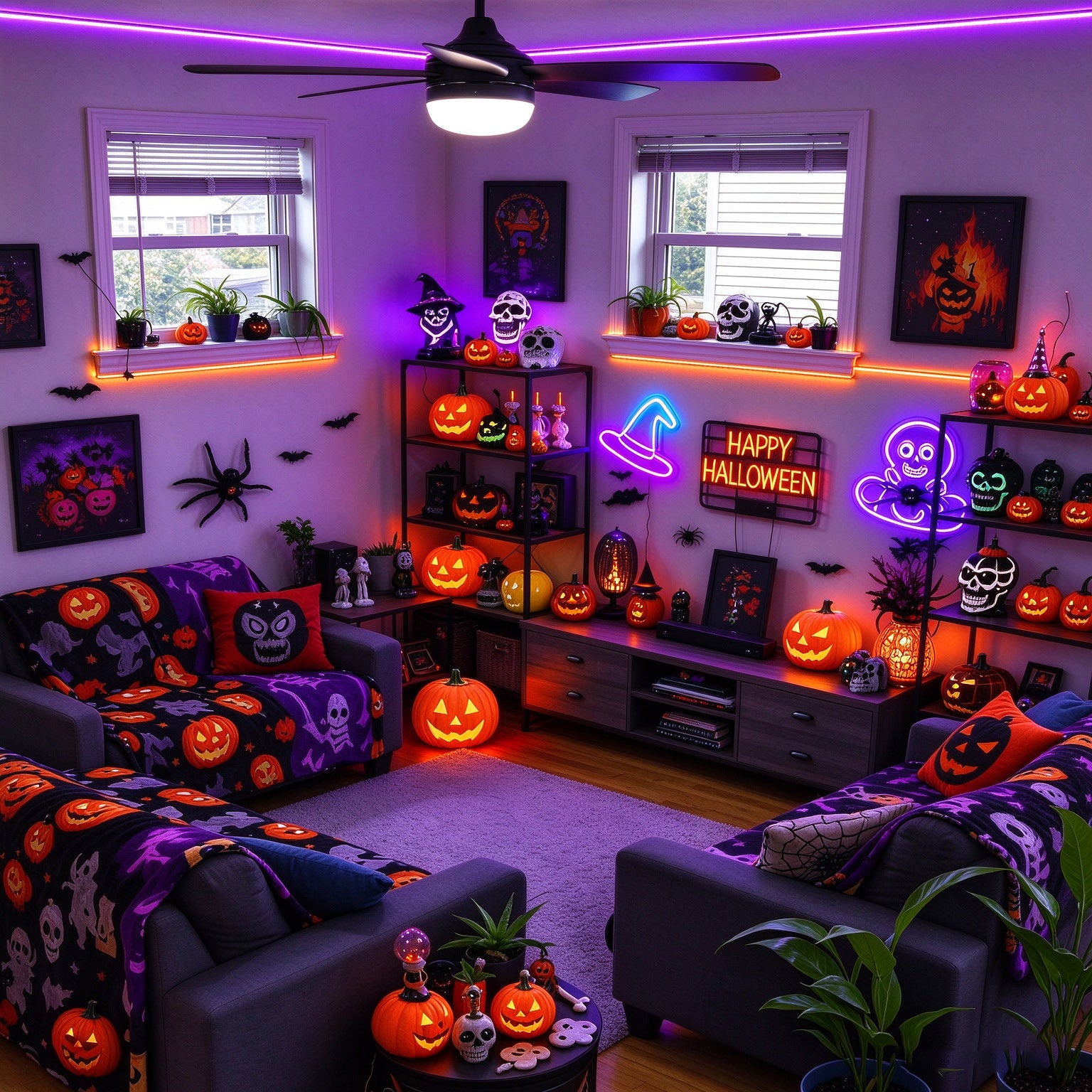
Smart RGB lighting can switch freely between warm light, cool light, and colored light. Set it to warm yellow for movie nights, switch to vibrant colors when hosting a party or gaming at home, and dial it to neutral white when you need to focus on work. One lighting setup covers multiple scenarios—perfect for a small living room that has to multitask.
Install smart RGB LED strip lights behind the TV or along the ceiling edge, controlled through a phone app or voice assistant. Pre-set different scenes (movie night, reading, party, everyday use) so you can switch with a single tap instead of manually adjusting the color each time.

Choosing the Right LED Strip Light for Your Living Room
The best LED strip light for your living room depends on how you want to use it. Whether you want soft ambient lighting, colorful entertainment effects, or seamless accent lighting, Lamomo offers different options for different spaces and styles.
Best for Cozy Everyday Lighting: Lamomo 24V COB LED Strip Light
Perfect for:
- TV walls
- Floating shelves
- Ceiling edges
- Cabinets
- Behind sofas
If you want your living room to feel warmer and more premium, a COB LED strip is a great choice. Unlike traditional LED strips, COB technology creates a smooth, continuous line of light without visible dots, making it ideal for areas where the light source can be seen.
Best for Large Living Rooms: Lamomo 120V COB LED Strip Light
Perfect for:
- Large walls
- Long ceiling installations
- Open living spaces
For larger living rooms that need longer lighting runs, the 120V COB LED strip provides extended coverage with fewer connections.
Best for Smart Mood Lighting: Lamomo RGB LED Strip Lights
Perfect for:
- Movie nights
- Gaming corners
- Parties
- Seasonal decorations
If you want your living room lighting to match different moods, RGB LED strips offer millions of color combinations and smart controls.
Best Budget-Friendly Accent Lighting: Lamomo Single Color LED Strip Light
Perfect for:
- Simple decoration
- Shelf lighting
- Small accent areas
For homeowners who only need warm decorative lighting without smart features, a single-color LED strip provides an affordable and easy upgrade.
Best for Adjustable Brightness: Lamomo Dimmable LED Strip Light
Perfect for:
- Reading areas
- Relaxing evenings
- Multi-purpose living rooms
A dimmable LED strip allows you to adjust brightness depending on the time of day.
Conclusion
A cozy small living room doesn’t require a major renovation—sometimes, the right lighting is all you need. From hidden LED strip lights behind your TV to shelf lighting and colorful accents, Lamomo lighting solutions make it easy to create a comfortable atmosphere that matches your style.