Table of Contents
The difference comes down to where the light lands. LED strip lights placed behind a mirror create a soft, floating halo that glows on the wall and sets a mood. LED lights placed around the front edge shine directly outward, giving you brighter, clearer light on your face. One is all about atmosphere, the other is all about function, and picking the wrong one can leave you with a mirror that looks great but doesn't do the job you bought it for. Let's break down how each placement looks, feels, and works in a real space.
What Do LED Strip Lights Look Like Behind a Mirror?
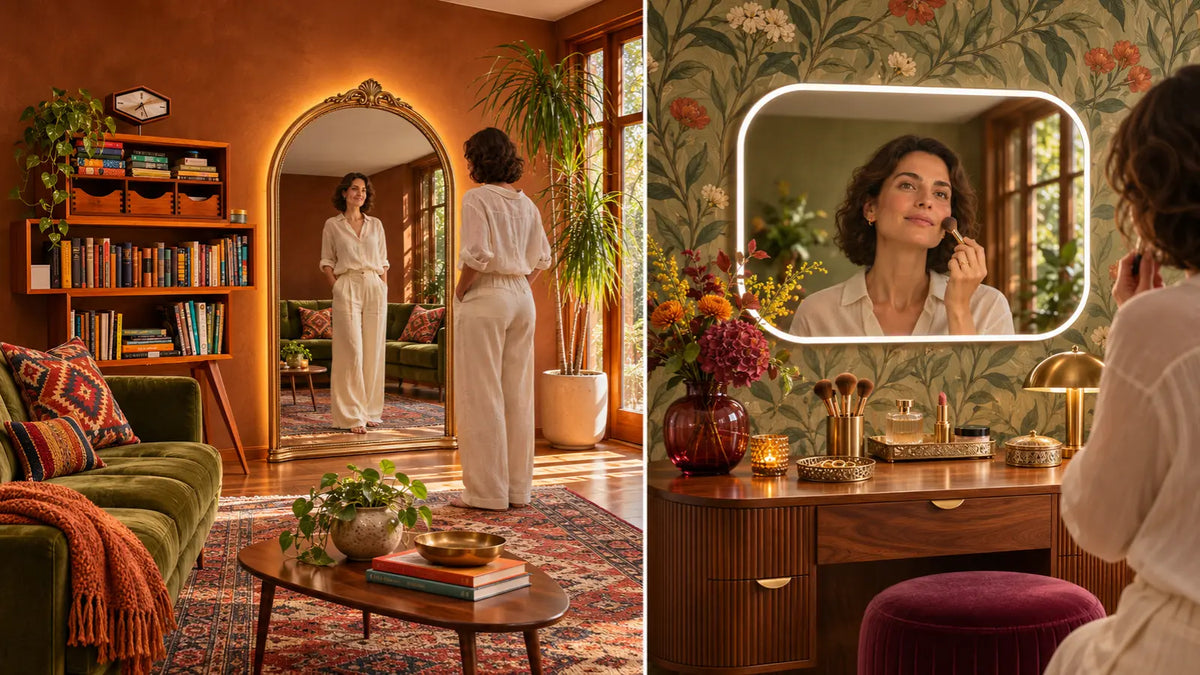
Backlighting is the "wow" option. When the strips sit hidden behind the mirror, you never see the lights themselves, only the glow they push out around the edges. The result is a gentle halo that makes the mirror appear to float off the wall, which instantly adds depth and a boutique-hotel kind of polish to any room.
This is indirect lighting, meaning the light bounces off the wall before it reaches your eyes. That is exactly why it feels so soft and calm. There are no harsh bulbs, no visible dots, and no glare in the glass. It works beautifully in bedrooms, entryways, living rooms, and dimly lit hallways, especially if you choose a warm white tone or an RGB strip that lets you switch the color to match your mood.
Here's the honest catch, though. Because the light points at the wall instead of at you, backlit mirrors don't brighten your face very well. If you apply makeup, shave, or style your hair in front of the mirror, you'll probably still need another light source. Backlighting also needs a small gap between the mirror and the wall, usually an inch or so, so the glow has room to spread. Without that gap, you'll only see a thin, uneven line of light.

What Changes When You Put LED Strips Around the Front Edge?
Moving the strips to the front edge changes the whole personality of the mirror. Instead of a subtle glow on the wall, you get direct, even light that wraps around your face from every side. This is the same principle behind Hollywood vanity mirrors, and it is popular for a good reason: it reduces shadows under the eyes, along the jawline, and beneath the nose.
For grooming, this is the clear winner. If you want accurate skin tones, look for LED strips in the 4000K to 5000K range with a high CRI (90 or above), so your foundation shade doesn't look different once you step outside. Many strips also let you dim the brightness, so the same mirror can go from daytime task lighting to a softer evening glow.
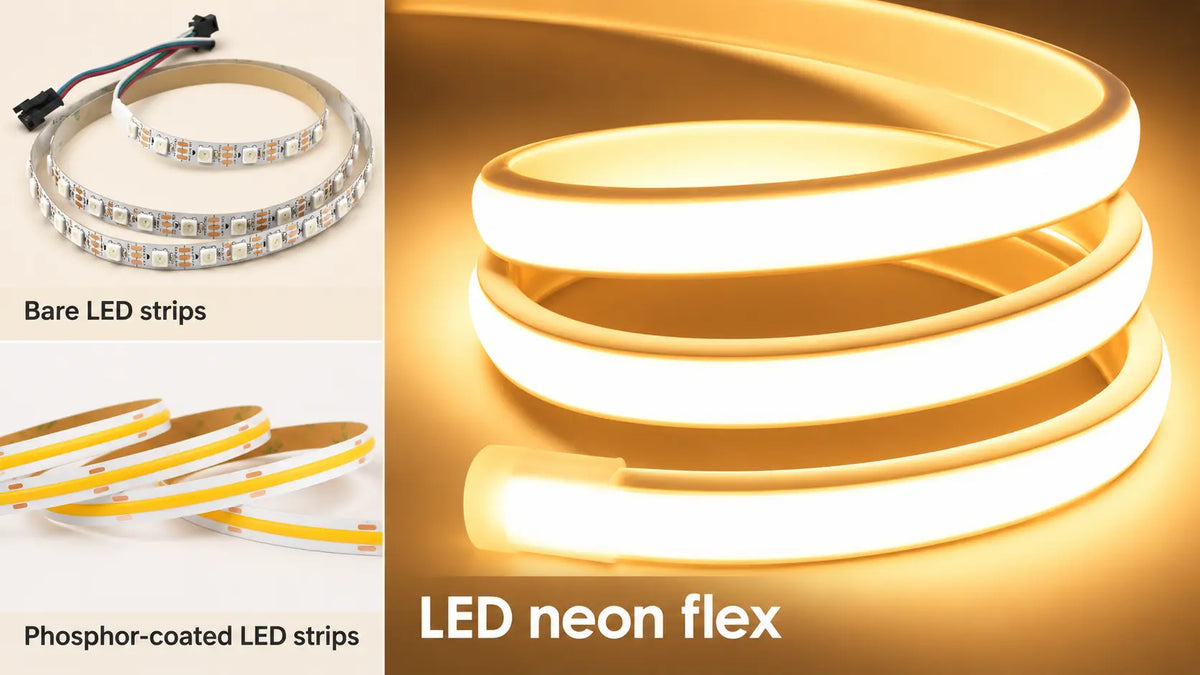
The trade-off is looks. Front-edge strips are visible, so the finish matters a lot. A bare strip can look a little DIY, while one tucked into an aluminum channel with a frosted diffuser looks clean, sleek, and almost custom-built. Just be careful with brightness near eye level, since strips without a diffuser can feel glaring up close. If the mirror lives in a bathroom, choose a moisture-resistant strip (IP65 or higher) so humidity doesn't shorten its life.

Which Placement Works Better for Your Mirror?
The honest answer is that it depends on what you use the mirror for. Here's a quick way to decide:
- Choose behind the mirror if you want ambiance, decor, or a night-light effect in a bedroom, living room, or entryway.
- Choose around the front edge if you do makeup, skincare, shaving, or detailed grooming and need bright, shadow-free light.
- Choose both if you want the best of both worlds: a front-edge strip for daily tasks and a backlit strip for a relaxed evening glow. Many people run them on separate switches.
Size and style matter too. Large wall mirrors and full-length mirrors look stunning with a backlit halo, since the glow outlines their shape. Smaller vanity and bathroom mirrors usually benefit more from front lighting, because that's where the practical light is needed. If you're torn, think about when you use the mirror most. Morning routines call for brightness, while evenings call for mood.
Test the Placement Before You Stick the Lights Down
Adhesive backing is strong, and peeling a strip off a wall or mirror can leave marks behind. So before you commit, take a few minutes to test:
- Tape it temporarily. Use painter's tape to hold the strip in place along the back or front edge.
- Plug it in and dim the room. Check the effect at night, since that's when you'll notice glare, hot spots, or uneven glow.
- Check the reach. Make sure the power supply and cable can get to an outlet without stretching or showing.
- Clean the surface. Wipe the area with rubbing alcohol so the adhesive holds well once you stick it down.
Once the effect looks right, press the strip down firmly and tidy up the cables. A little patience here saves a lot of re-sticking later.
Ready to give your mirror a glow-up? Browse the LED strip lights at Lamomo to find the right color and length for your space, whether you want a dreamy halo or a bright, flattering vanity.