Table of Contents
Anyone who cooks regularly knows just how frustrating it is to cook in poor lighting. You’re struggling to see what you’re chopping, reaching for an extra light with one hand while trying to stir with the other. Suddenly, preparing a simple meal becomes much harder than it needs to be.
The good news is a few changes here and there can make a huge difference.
In this article, we’ll explore common kitchen lighting problems and 10 kitchen lighting ideas and solutions to make everyday cooking easier.
Common Kitchen Lighting Problems
Poor kitchen lighting often comes down to a few common issues. Here are three problems that could make everyday cooking more difficult.
1. Insufficient or Uneven Lighting
A kitchen might have a bright ceiling light but still leave certain areas poorly lit. Enclosed areas, such as corners, sinks, and the spaces beneath cabinets, often receive less light than the rest of the room. This makes it harder to see clearly while preparing ingredients, washing dishes, or looking for items in storage.
2. Shadows Over Work Surfaces
Designers sometimes choose light fixture placements based on appearance without considering how they affect food preparation. For example, a ceiling light positioned behind you can cast your shadow across the countertop while you chop vegetables or prepare ingredients.
3. Glare and Harsh Lighting
Lighting that’s too intense or shines directly into your eyes makes the kitchen uncomfortable to work in. Instead of helping you see better, the glare distracts you from what you’re doing.
In cases where your kitchen includes a dining area, harsh lighting can make it less comfortable to enjoy meals or spend time with family.

10 Kitchen Lighting Ideas to Brighten Your Space
The right lighting depends on how you use your kitchen and which areas need light more than others.
Below are 10 kitchen lighting ideas you can try out.
1. Layered Kitchen Lighting
Depending on the size of your kitchen, one ceiling light might not illuminate the entire room. Combining general lighting with task lighting over work surfaces and ambient lighting for a softer atmosphere helps cover different needs. This approach keeps preparation areas well-lit while making the rest of the kitchen feel bright and comfortable.
2. Recessed Ceiling Lighting
Recessed lights are perfect for kitchens where you want a clean ceiling without bulky fixtures. You can distribute them across the ceiling to illuminate the room more evenly. You can also position them directly above work surfaces to improve lighting where you prepare food.
For the best results, follow the manufacturer’s spacing recommendations to avoid dark patches or overly bright spots across the kitchen.
3. Pendant Lights for Kitchen Islands
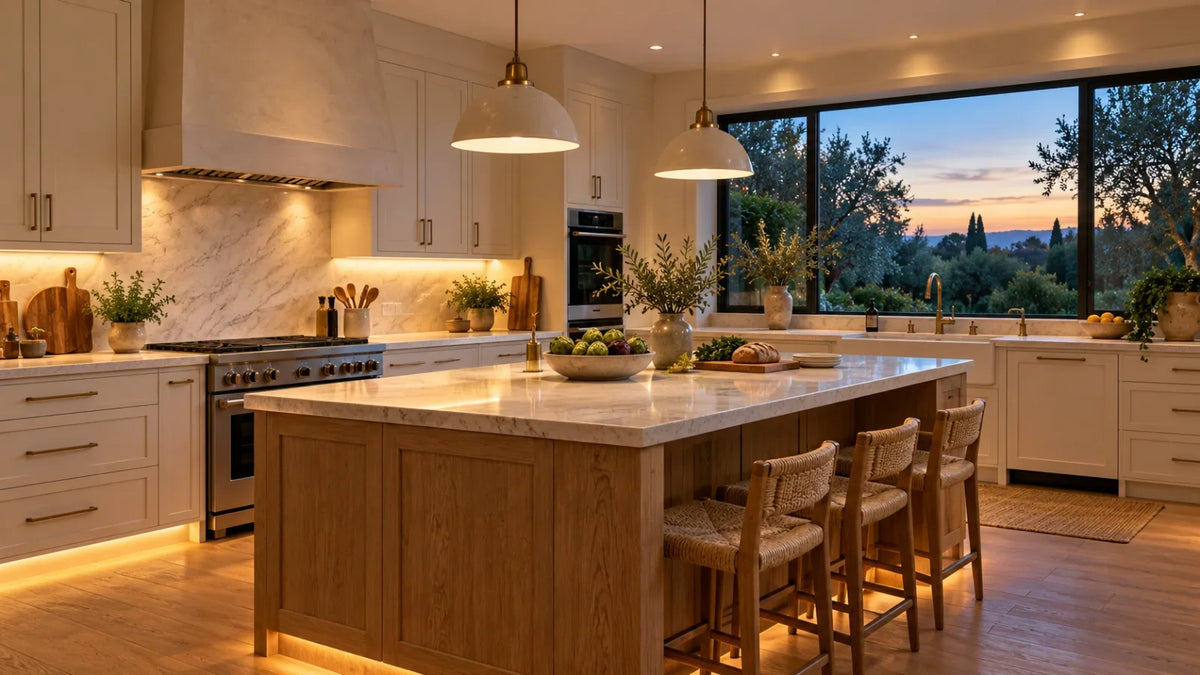
Pendant lights are among the most popular kitchen island lighting ideas. They provide focused task lighting for food preparation while complementing the kitchen’s design. For longer islands, several smaller pendants can distribute light more evenly than one fixture. Hang them high enough to keep the view clear, with shades that direct light onto the countertop without creating glare.
4. Under-Cabinet LED Strip Lighting
Under-cabinet lighting helps illuminate countertops that overhead fixtures often leave in the shadow. You can try Lamomo’s Warm White 24V COB LED Strip Light Set for a smooth, dot-free line of light beneath your cabinets. Its 3000K warm white output creates a softer appearance than cooler white lighting.
The strips come in several lengths, from 6.56 feet to 65.6 feet, making it easier to find an option for your cabinet run. You can cut them at the marked 5 cm intervals for a closer fit.
If you need to control the brightness, choose a dimmable option that lets you adjust the light from 10% to 100% using the included remote.

5. Pantry Lighting
Pantries often contain ingredients, tools, and other supplies that are harder to find when the shelves are poorly lit. Adding lighting inside the pantry helps you read labels and locate items without moving everything around. LED strip lights fit neatly along shelf edges or beneath shelves without taking up much room.
Tube lights are another option, especially for longer shelves that need more even illumination.
6. Cabinet Toe-Kick Lighting
You can also extend your kitchen lighting to the recessed space beneath base cabinets. Toe-kick lighting creates a subtle glow along the floor, helping define cabinet edges and adding atmosphere in the evening.
A low-profile LED strip installed beneath the cabinets creates this effect without taking up floor space. Direct the light toward the floor to avoid shining it into people’s eyes.
7. Wall Sconces for Kitchen Dining Areas
For kitchens that also include dining areas, wall sconces provide ambient lighting around breakfast nooks, dining corners, or open shelving. They add localized lighting without requiring another ceiling fixture. Choose shades that diffuse light comfortably, especially when people sit nearby. If the kitchen already has strong overhead lighting, sconces provide a softer option for meals and relaxed conversations.

8. Lighting for Glass-Fronted Cabinets
Glass-fronted cabinets offer an opportunity to display glassware, dishes, and decorative pieces. Small spotlights or discreet LED strips inside the cabinets help these items stand out. Choose lighting that complements the contents without creating harsh reflections on the glass. Keep the fixtures discreet so they don’t compete with the items on display.
9. Kitchen Track Lighting
Track lighting works well when you need focused light in several parts of the kitchen. Its adjustable spotlights let you direct light toward countertops, the sink, or darker corners. This flexibility makes it useful when one fixed ceiling fixture cannot illuminate the entire layout. You can reposition individual spotlights as your lighting needs change.
10. Dedicated Lighting Above the Kitchen Sink
The sink often sits beneath a window or in an area that receives limited daylight. A suitable ceiling fixture or moisture-rated light helps illuminate the basin when washing produce or dishes. Position the light to reduce shadows from your head and shoulders.
Note: If you choose LED strip lights near a sink or other damp area, check the product’s moisture rating before installation. Lamomo lists its LED strips as IP65-rated, but the power adapter and controller are not waterproof. Keep those components away from splashes and damp areas.
How to Choose the Right Kitchen Lighting
When choosing the right kitchen lighting, consider the following factors:
Brightness
- Identify areas that need more light, such as countertops, sinks, and kitchen islands.
- Choose fixtures that provide enough light for food preparation without making the room uncomfortably bright.
- For larger kitchens, combine several light sources to illuminate the room evenly.
Color Temperature
- For a cozy atmosphere in dining areas and during evening meals, choose warm white lights
- You can also consider a neutral white light for food preparation areas where you need to see ingredients clearly.
- Match the color temperature across nearby fixtures to avoid noticeable differences in light color.
Fixture Placement
- Position ceiling lights to illuminate the room without leaving countertops in shadow.
- Install under-cabinet lighting to brighten work surfaces beneath wall cabinets.
- Hang pendant lights above kitchen islands, keeping them high enough to avoid obstructing views.
Kitchen Layout
- Consider how cabinets, appliances, and walls affect the way light spreads through the room.
- Use recessed lights for general illumination in kitchens with limited ceiling space.
- Choose adjustable track lighting when you need to direct light toward different areas.
Installation and Maintenance
- Check the fixture’s power requirements and installation instructions before buying.
- For lighting near sinks, check the moisture rating and keep electrical components protected from splashes.
- Choose fixtures that are easy to clean and maintain, especially in areas exposed to cooking grease.
FAQs
Can I combine different types of kitchen light fixtures?
Yes. You can combine recessed ceiling lights, pendant lights, wall sconces, and LED strips to suit different areas of your kitchen. Choose each fixture based on its purpose, then coordinate the finishes and light colors for a cohesive look.
Where should I place lights in a small kitchen?
Focus on areas you use most, including countertops, the sink, and food preparation spaces. Recessed ceiling lights illuminate the room without bulky fixtures, while under-cabinet lighting brightens work surfaces without taking up counter space.
What type of lighting works best above a kitchen island?
Pendant lights provide focused lighting while adding visual interest. For longer islands, several smaller pendants can distribute light more evenly than one fixture. Position them to illuminate the countertop without obstructing views across the kitchen.
Can I install kitchen lighting myself?
Some plug-in and battery-powered lights are suitable for DIY installation. Lamomo LED strips are also designed for self-installation. Hardwired fixtures require more care, so consult a qualified electrician if you’re unfamiliar with electrical work.
Conclusion
The right kitchen lighting makes everyday cooking easier while creating a more inviting space. From pendant lights to under-cabinet LED strips, the best choices depend on your kitchen’s layout and how you use it.
Explore Lamomo’s LED strip lighting collections to find a suitable fit for your kitchen cabinets, shelves, or other areas that need extra light.
With thoughtful placement and the right fixtures, you can create a kitchen that’s both practical and welcoming.