










Table of Contents
You bought a big TV for your home, but you don't watch it often, and it is starting to collect dust. You want an immersive movie experience but dislike cinemas because they are too noisy. An iPad is too small; watching it for a long time makes your eyes tired, and the screen is too small to create a good atmosphere. This is why many people want to build a home theater—a fully immersive space with surround sound for watching movies. This article will explain how to set up a home theater.
In fact, setting up a home theater is not as complicated as you might think. You don’t need to turn your room into a mini cinema or buy expensive professional equipment. If you follow the right steps one by one, you can turn your living room or a spare room into a private space where you can enjoy movies at any time.
In this Step-by-Step Guide, I will break down the setup process into three core steps: from choosing the basic hardware, to optimizing the environment and layout, and finally, adding soul to the space through lighting and decor. Whether you are starting from scratch or want to upgrade what you already have, you will find practical advice in this article.
Hardware for Home Theater: The Technical Foundation
The most important part of a home theater is the hardware. At the beginning of your design, you need to choose the most suitable display device based on your budget and viewing habits: a TV, a projector, or a professional cinema screen.
Next is the audio equipment. Will you choose a whole-room surround sound system or a simple soundbar? You also need to plan the seating arrangement and viewing distance. Let’s take a closer look at how to choose each piece of hardware.
Choosing the Display: TV vs Projector
This is the first and most important choice when building a home theater. Your decision will directly affect the room layout, your viewing experience, and how you spend your budget. Simply put, both TVs and projectors have their own strengths; it all depends on what you value most.
The main advantage of a TV is picture quality. If you want the best brightness, contrast, and color accuracy—especially in a room with some natural light—a high-quality LED or OLED TV is currently your best choice.
Samsung & LG: These two brands represent the highest level of TV technology today. If you want deep blacks and infinite contrast, LG’s OLED series (like the C or G series) is a popular pick for movie lovers. If you often watch movies during the day in a bright room, Samsung’s Neo QLED (Mini-LED) TVs are famous for their amazing brightness, which reduces reflections and keeps the picture clear and vivid.
GFF Portable Mobile TV: If you need more flexibility—like watching a game in the living room and then moving the screen to the balcony—a mobile TV stand like the GFF S1 is a creative option. It combines a TV with a floor stand and wheels. This means the TV is no longer fixed to a wall or cabinet; you can move it anywhere to fit your lifestyle. It blurs the line between a "fixed" TV and a "flexible" mobile device.

The core advantage of a Projector is size and atmosphere. It can easily project a 100-inch, 120-inch, or even larger image onto your wall. This level of immersion is hard for any TV to match. When the lights go out, and the giant screen lights up, you get an experience that is closest to being in a real cinema.
How to Choose?
Choose a TV if:
- You cannot fully control the light in your room, or you want to watch clearly during the day without closing the curtains.
- You are a picture quality enthusiast who wants the best detail, HDR effects, and color.
- Your viewing distance is short (for example, less than 3 meters), or your room is small; a 75 to 85-inch TV is enough.
- You use the screen for many things, such as watching movies, playing high-frame-rate games, and watching sports.
Choose a Projector if:
- You have a separate room or a basement that can be made completely dark.
- You are obsessed with a "giant screen" and want a picture larger than 110 inches.
- You enjoy the "movie night" ritual and want the full experience of "screen down, lights off."
- You have a limited budget but want the largest screen possible (the cost per inch for a projector is much lower than a TV).
No matter which one you choose, it is recommended to measure your wall space and viewing distance first. A simple rule of thumb: the diagonal length of your TV or screen should be 1/3 to 1/5 of your viewing distance. The further away you sit, the larger the screen can be.
Sound System: Why Audio Matters More Than Screen Size
When building a home theater, many people spend 90% of their budget and attention on the picture, often treating the audio system as an afterthought. This is a common mistake. In fact, sound often has a bigger impact on immersion than screen size.
You can try a simple experiment: pick a movie you like and watch it for five minutes without any sound. Your emotions and interest will drop immediately. Then, turn the sound back on and close your eyes. You can still feel the tension, sadness, or excitement. Our ears are more sensitive than our eyes; sound is the direct gateway to atmosphere. A large, ordinary screen paired with an excellent sound system provides a much better experience than a top-tier TV using only its built-in speakers.
Now, let’s look at some popular audio solutions.
Soundbar vs. Surround Sound
This is the main choice most people face when they have a limited budget.
Soundbar: This is the most convenient and space-saving option. A long speaker sits under your TV and uses physical reflection or digital technology to mimic surround sound. The advantages are simple installation and a clean look. It is perfect for users with limited space who don't want to deal with messy wires or don't need "perfect" sound quality. High-end soundbars often come with a separate subwoofer and wireless rear speakers, which can provide a very good experience.
Surround Sound: This is a "true" home theater audio setup. It consists of several separate speakers placed in different parts of the room. Its advantage is irreplaceable—the sense of direction and being "wrapped" in sound. When a car drives from the left to the right of the screen, you can actually hear the sound move from your left, across the front, to your right. In a forest scene, you will hear the details of the wind and grass all around you.
5.1 / 7.1 Systems: Classic Surround Sound Options
These numbers represent the most common surround sound setups for beginners and advanced users. The first number is the number of main speakers, and the second number is the number of subwoofers.
5.1 System: This is the classic entry-level setup for a home theater. It includes:
- Front Left, Center, and Front Right: These handle the main sound and dialogue on the screen.
- Left and Right Surround: These handle environmental sounds from the sides and back.
- One Subwoofer: This provides powerful bass for effects like explosions or thunder.
The Center speaker is especially important because it carries most of the dialogue; a high-quality center speaker makes voices much clearer.
7.1 System: This adds two more speakers (Rear Left and Rear Right) to the 5.1 setup. It divides the sound behind you into more detail. The movement of sound becomes smoother, and the feeling of being "surrounded" is more complete. If your room is large enough and your sofa is not against a wall, a 7.1 system is a great upgrade.
Dolby Atmos: Turning Sound into a 3D Space
If 5.1 and 7.1 systems spread sound out on a flat surface (front, back, left, and right), then Dolby Atmos lifts that sound into a 3D space.
The key to Atmos is adding overhead speakers (ceiling speakers) or using special Atmos speakers that bounce sound off the ceiling. When a plane flies overhead on the screen, Atmos makes it sound like it is actually passing over your head, not just coming from the front speakers. This "sense of height" changes the sound from 2D to 3D, making the experience much more immersive.
Seating & Viewing Distance
Once you have chosen your display and audio equipment, you need to connect them with the most important part: you. Proper seating and viewing distance not only make watching more comfortable but also help your sound system perform at its best.
According to THX (a professional cinema standard), the screen should take up about 40 degrees of your field of vision. A simple way to calculate this is:
Viewing Distance ≈ 1.2 to 1.5 times the screen's diagonal length.
Following this rule allows the screen to fill your vision for an immersive feeling without straining your neck.
Environment Optimization: Room Acoustics & Wall Treatment
You have chosen your hardware, but you might find that after bringing expensive speakers home, the sound feels "noisy" or "empty," and the picture isn't as clear as it was in the store. The problem is usually the environment—an untreated room is quietly ruining your movie experience.
Here are a few low-cost but effective ways to optimize your space:
- Carpets absorb sound: If your floor is tile or wood, sound reflections will be very strong. Putting down a thick carpet can immediately absorb much of the mid-to-high frequency reflections, making the sound cleaner and more solid. This is the most cost-effective way to improve your room's acoustics.
- Curtains reduce echo: Glass windows are the enemy of both sound and light. Installing thick fabric curtains helps absorb sound and reduce echoes. When closed, they also block out outside light, which is especially important for projectors.
- Dark wall colors reduce reflection: Painting your walls dark gray or deep green—or hanging dark acoustic panels/tapestries—can significantly reduce light bouncing between the walls and the screen. This greatly improves picture contrast, making blacks deeper and colors richer. For projector users, this step is almost a must.
Simply put, treating the acoustics and lighting of your room through soft decor is how you let your hardware truly "shine." By spending a little money on these changes, you will see and hear a massive improvement.
Atmosphere Design for Home Theater
While hardware sets the standard for your experience, and environment optimization improves the baseline, atmosphere design is the final touch—it is what makes you want to put away your phone and truly immerse yourself.
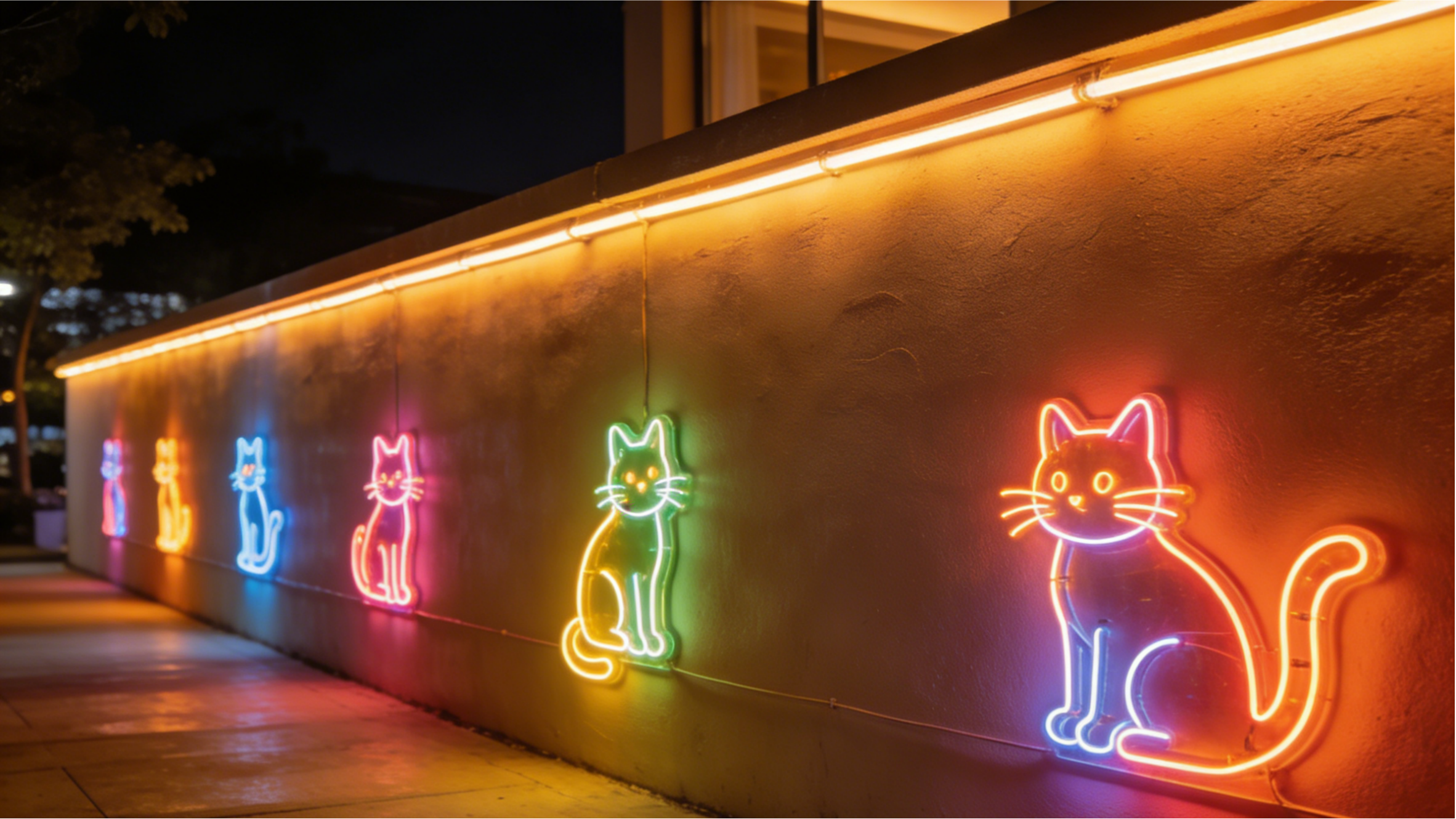
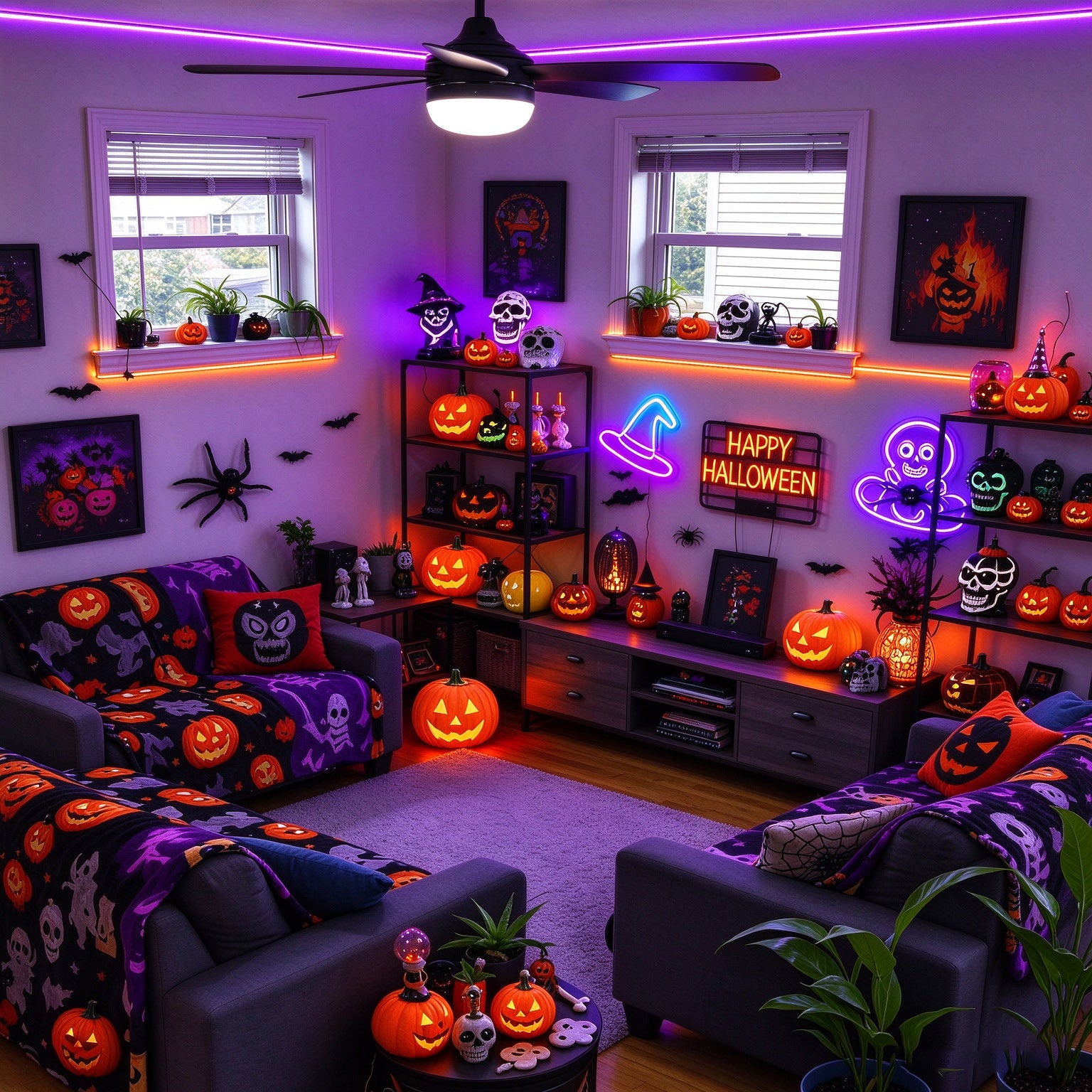
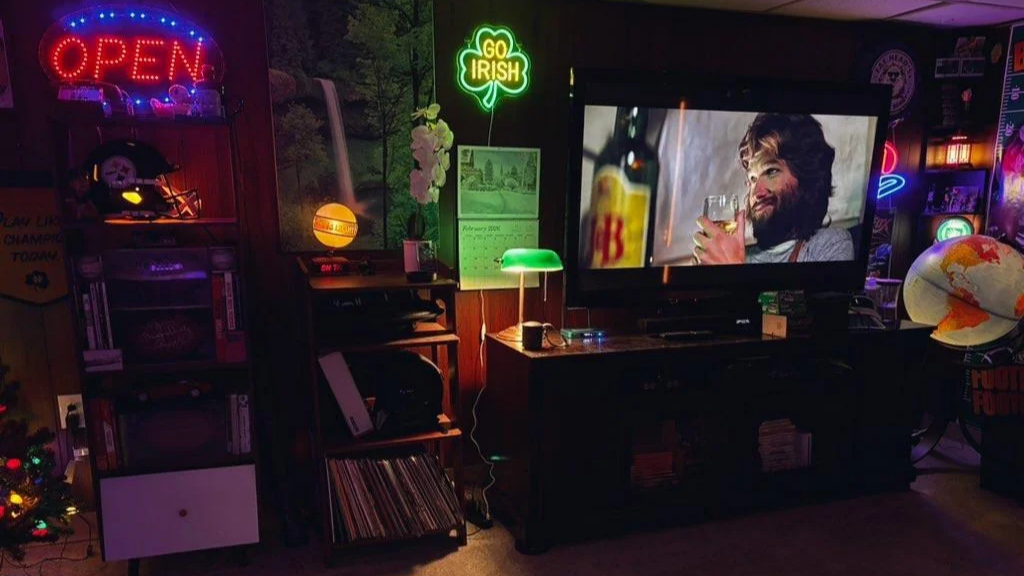
To build a comfortable home theater, soft decor is just as important as the equipment. Items like lights, neon signs, and LED strips are key to creating the right mood. They don't produce sound or show pictures, but they determine how you feel the moment you walk into the room.
LED Strip Lights
These are currently the most cost-effective tools for creating an atmosphere. It is recommended to choose RGBIC (which can show multiple colors at once) or RGBWW (which allows you to adjust the warmth of white light) versions.
- Where to put them? On the back of your TV or projector screen (to create a halo effect), around the edges of the ceiling (for a "wall-washing" look), or along the baseboards (to make the furniture look like it's "floating").
- How to use them? When watching a movie, it is best to set them to a warm white light (2700K-3000K) or a low-saturation deep blue or purple. Avoid bright colored lights shining directly into your eyes. Their job is to outline the space, not to light up the whole room.

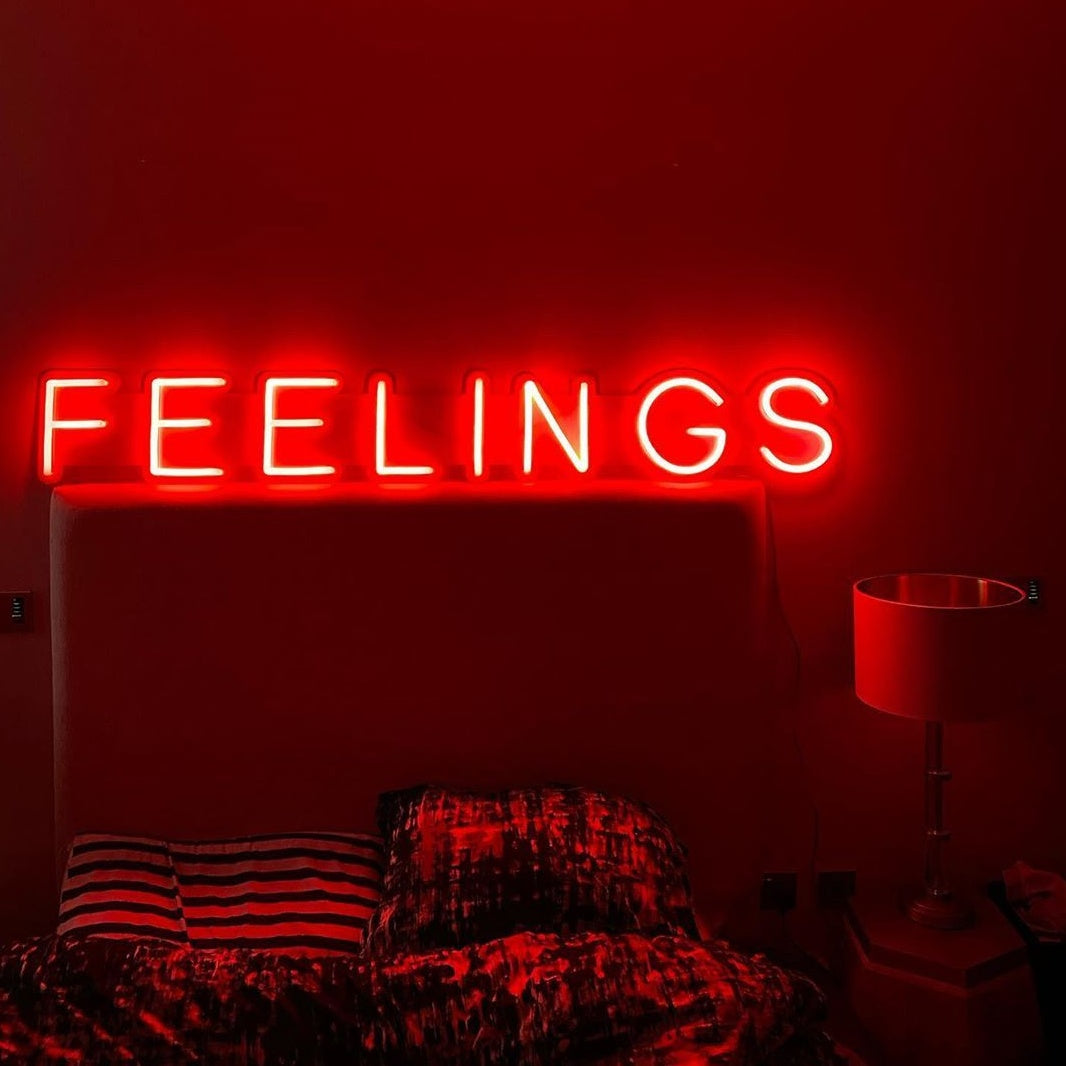
Custom Neon Signs
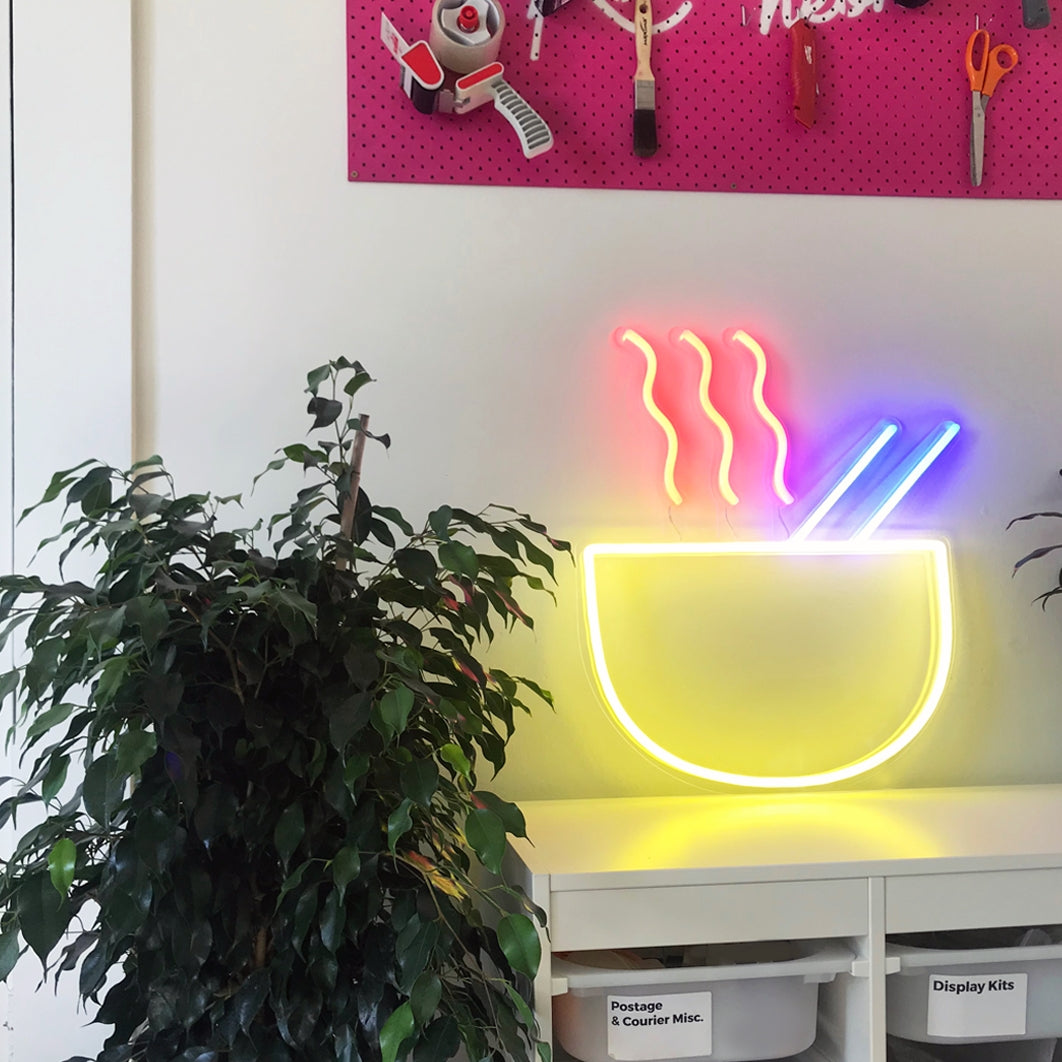
These are popular decorative elements in modern home theaters. A favorite movie quote or a classic logo (such as "On Air" or "Cinema") displayed in a custom neon sign will immediately become the visual focus of the room.
- What to choose? We recommend LED custom neon signs. They are safer and last longer than traditional glass tubes. You can customize them with your favorite movie lines, like "Yer a wizard, Harry" or "To infinity and beyond."
- Where to put them? Hang them on a wall at eye level or slightly higher. Avoid placing them directly opposite the screen to prevent reflections. During a movie, a neon sign can be the only dim light source—it won't ruin the picture, but it creates a great atmosphere.

Smart Ambient Lighting
True immersion comes from "one-tap scene switching." By using smart bulbs or smart switches, you can pre-set your lighting into several modes:
- Movie Mode: All main lights turn off, the LED strips dim, and the neon signs stay on.
- Cleaning Mode: All white lights turn on at full brightness, making it easy to clean or find things.
- Intermission Mode: Dim, warm lights turn on in the aisles or hallways, making it safe to go and grab snacks.
Movie Posters & Themed Decor
This is the part that gives the space its "soul." If the walls are just dark, it's a cave; but once you hang your favorite movie posters, it becomes your private cinema.
- How to choose posters? Pick movies that are meaningful to you. They could be old classics (like The Godfather or 2001: A Space Odyssey) or recent films that touched your heart. We suggest buying high-quality prints and framing them in black or dark wood frames to make them look much more professional.
- Other decorations: Put action figures of your favorite characters on display shelves, place an old-fashioned popcorn machine in the corner, or even display a vintage film canister. These details make the space truly yours.

Think of it this way: Lighting creates layers—main lights are for function, COB LED strips are for outlines, and neon signs are for mood. Decoration is for storytelling—every poster on the wall tells a story about you and the movies.
When the lights fade out, the screen glows, and you sit in a soft chair surrounded by perfect lighting and the movies you love—that is when your home theater truly fulfills its mission.
Conclusion
A home theater is not about technology alone — it’s about how the space makes you feel. From a dusty big TV at the start to an immersive space with great sound and light, building a home theater is a journey of choices. In fact, the true answer to how to set up a home theater is not about buying the most expensive equipment or chasing perfect specs; it is about creating a space where you truly want to stay.
You don't need to get everything perfect at once, and you don't need to compare yourself with others. Start with a small change—change a light, add a rug, or simply wipe the dust off your TV. Find a movie you’ve always wanted to watch and press play.
After all, the best home theater isn't the one with the most expensive gear—it’s the one where you spend the most time.